
The key role of green silicon carbide powder in refractory materials
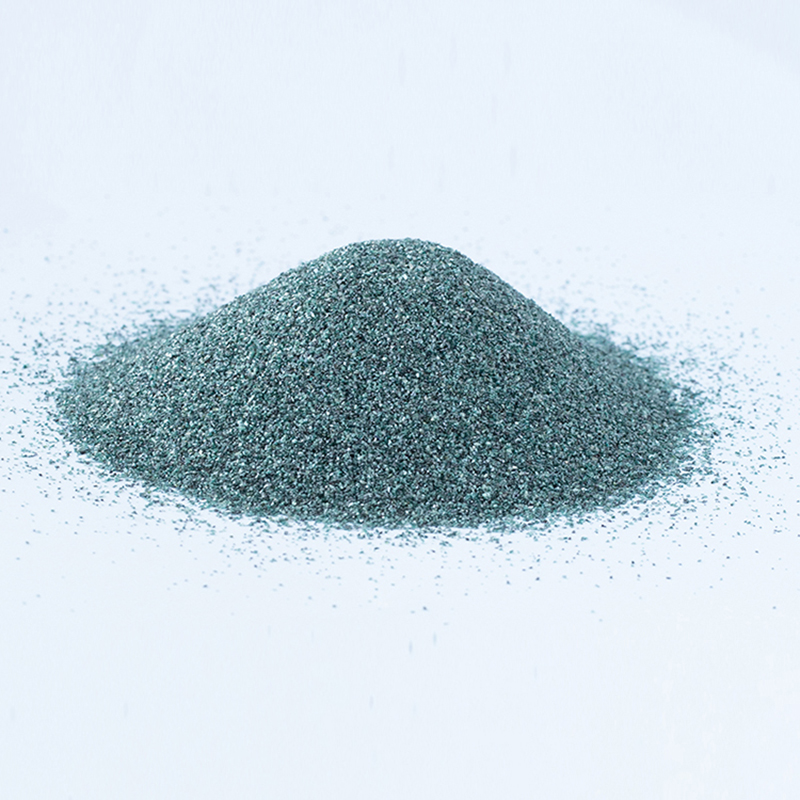
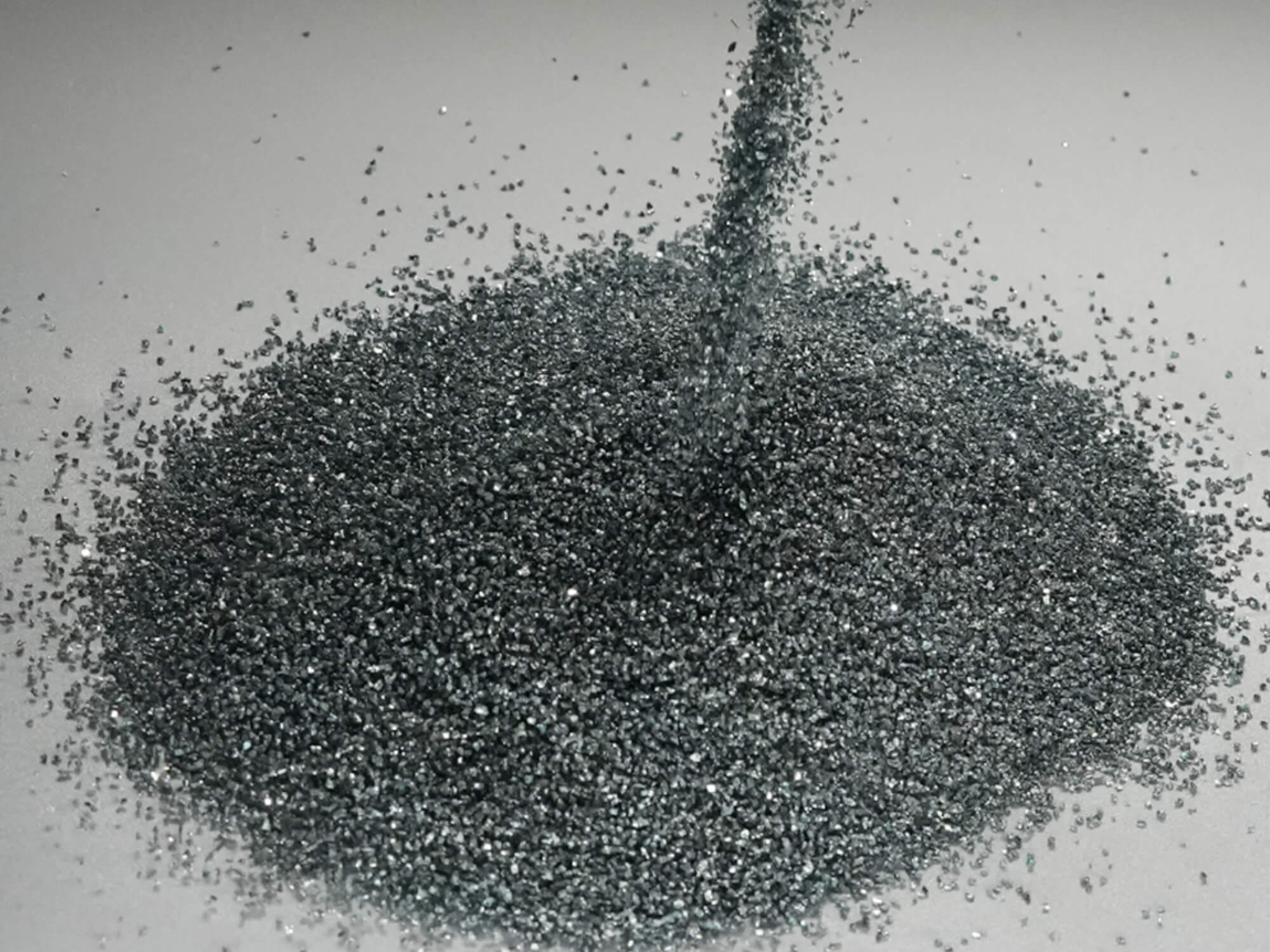
Green silicon carbide powder, the name sounds tough. It is essentially a kind of silicon carbide (SiC), which is smelted at more than 2000 degrees in a resistance furnace with raw materials such as quartz sand and petroleum coke. Different from the common black silicon carbide, it has precise control of the process in the later stage of smelting, with very few impurities and high crystal purity, so it presents a unique green or dark green color. This “purity” gives it almost extreme hardness (Mohs hardness is as high as 9.2-9.3, second only to diamond and boron carbide) and extremely excellent thermal conductivity and high-temperature strength. In the arena of refractory materials, it is a “hard bone” that can withstand, fight, heat and build.
So, how can this green powder show its strength in the harsh world of refractory materials and become an indispensable “key man”?
Improve strength and cast high-temperature “steel bones”: Refractory materials are most afraid of “not being able to withstand” high temperatures, becoming soft and collapsing. Green silicon carbide micropowder has extremely high hardness and excellent high-temperature strength. Adding it to various refractory castables, ramming materials or bricks is like adding high-strength steel mesh to concrete. It can form a solid support skeleton in the matrix, greatly resisting the deformation and softening of the material under high temperature load. The castables of the blast furnace iron channel of a large steel plant used ordinary materials before, which eroded quickly, the iron flow rate could not be increased, and frequent maintenance delayed production. Later, technical breakthroughs were made, and the proportion of green silicon carbide micropowder was greatly increased. “Hey, it’s amazing!” The workshop director later recalled, “When the new material was put in, the molten iron flowed through, the channel side was obviously ‘gnawed’, the iron flow rate turned upside down, and the number of maintenance times was reduced by more than half, and the savings were all real money!” This toughness is the basis for the longevity of high-temperature equipment.
Improve heat conduction and install a “heat sink” on the material: The more heat-insulating the refractory material is, the better! For places like coke oven doors and aluminum electrolytic cell side walls, the material itself needs to quickly conduct internal heat to prevent local temperature from being too high and damaged. The thermal conductivity of green silicon carbide micropowder is definitely an “excellent student” among non-metallic materials (the room temperature thermal conductivity coefficient can reach more than 125 W/m·K, which is dozens of times that of ordinary clay bricks). Adding it to the refractory material in a specific part is like embedding an efficient “heat pipe” into the material, which can significantly improve the overall thermal conductivity, help the heat to be quickly and evenly dissipated, and avoid local overheating and peeling or damage caused by “heartburn”.
Enhance thermal shock resistance and develop the ability to “remain calm in the face of change”: One of the most troublesome “killers” of refractory materials is rapid cooling and heating. The furnace is turned on and off, and the temperature fluctuates violently, and ordinary materials are easy to “explode” and peel off. Green silicon carbide micropowder has a relatively small thermal expansion coefficient and fast thermal conductivity, which can quickly balance the stress caused by temperature difference. Introducing it into the refractory system can significantly improve the material’s ability to resist sudden temperature changes, that is, “thermal shock resistance”. The kiln mouth iron castable of the cement rotary kiln is subjected to the most severe cold and hot shocks, and its short life was a long-standing problem. An experienced furnace construction engineer told me: “Since the use of high-strength castables with green silicon carbide micropowder as the main aggregate and powder, the effect has been immediate. When the cold wind blows when the kiln is stopped for maintenance, other parts crackle, but this kiln mouth material is firm and stable, and there are fewer surface cracks. After a cycle, the loss is visibly reduced, saving many repair efforts!” This “calmness” is to deal with the ups and downs in production.
Because green silicon carbide micropowder combines high strength, high thermal conductivity, excellent thermal shock resistance, and strong erosion resistance, it has become the “soul mate” in the formulation of modern high-performance refractory materials. From blast furnaces, converters, iron trenches, and torpedo tanks in iron and steel metallurgy to electrolytic cells in nonferrous metallurgy; from key parts of cement kilns and glass kilns in the building materials industry to highly corrosive kilns in the fields of chemical industry, electric power, and waste incineration, and even pouring cups and flow steel bricks for casting… Wherever there is high temperature, wear, sudden change, and erosion, this green micropowder is active. It is silently embedded in every refractory brick and every square of castable, providing solid protection for the “heart” of the industry – high-temperature kilns.
Of course, the “cultivation” of green silicon carbide micropowder itself is not easy. From raw material selection, precise control of resistance furnace smelting process (to ensure purity and greenness), to crushing, grinding, pickling and impurity removal, hydraulic or airflow precision classification, to strict packaging according to particle size distribution (from a few microns to hundreds of microns), each step is related to the stable performance of the final product. In particular, the purity, particle size distribution and particle shape of the micropowder directly affect its dispersibility and effect in refractory materials. It can be said that high-quality green silicon carbide micropowder is itself the product of the combination of technology and craftsmanship.