
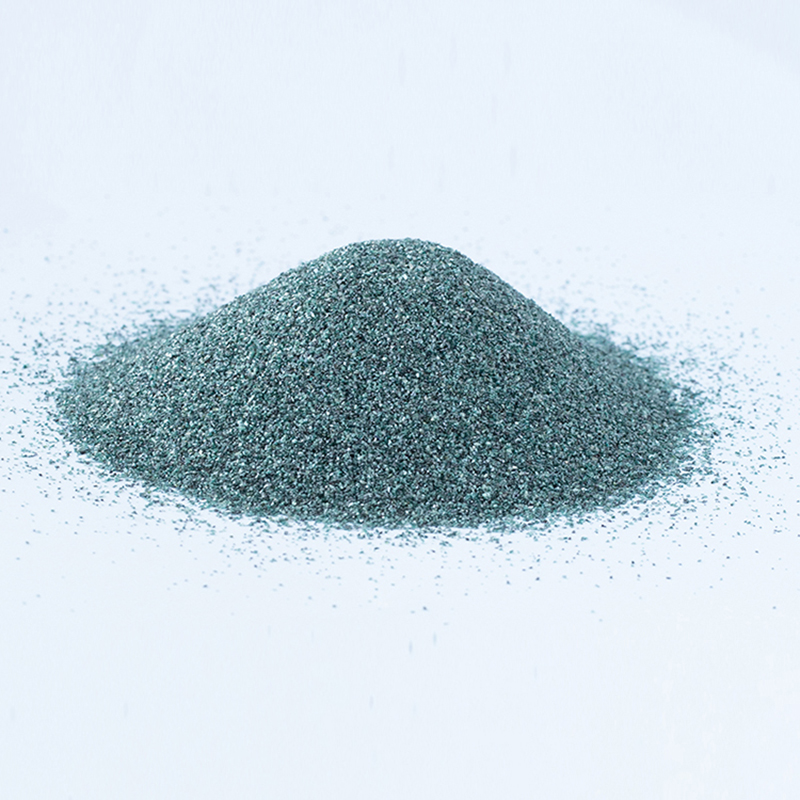
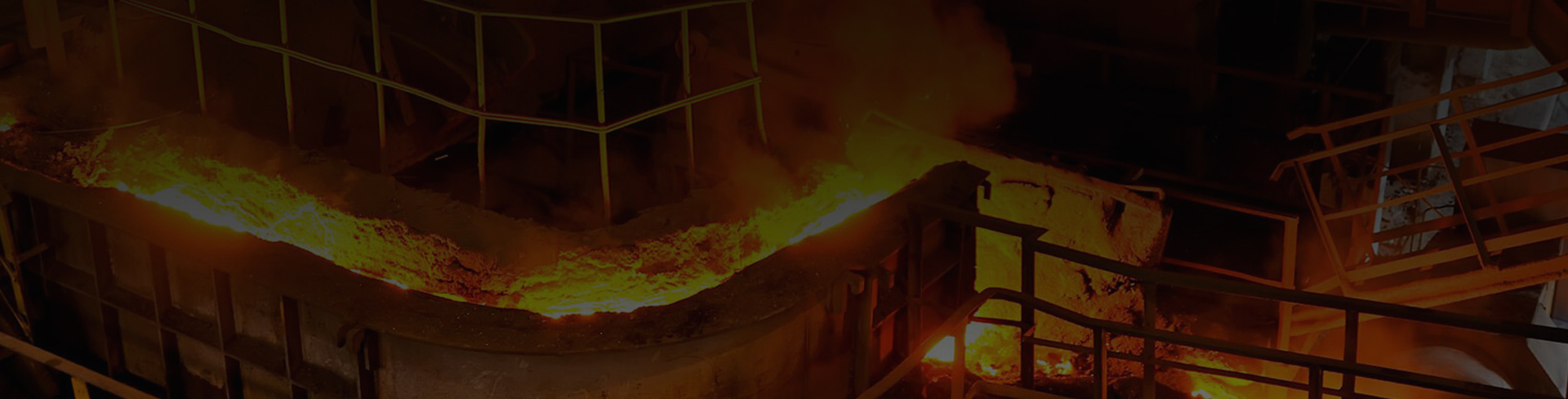
Last month, I visited a senior engineer at a refractory materials factory in Hebei. Pointing to a sample just taken from the kiln, he told me, “Look at this cross-section. The addition of ‘green silicon carbide micropowder’ makes a real difference; the crystals are denser, and the color is more accurate.” The “green silicon carbide micropowder” he mentioned is the subject of our discussion today—green silicon carbide micropowder. While it’s a familiar ingredient in the abrasives industry, its innovative applications in the refractory materials field in recent years have been truly remarkable.
You might not believe it, but green silicon carbide micropowder was initially just a “supporting ingredient” in refractory materials. In earlier years, some manufacturers would add small amounts to improve the wear resistance of certain refractory products. However, in the last five or six years, the situation has completely changed. As industries like steel, non-ferrous metals, and ceramics place increasingly higher demands on kilns—requiring high-temperature resistance, corrosion resistance, and long service life—ordinary refractory material formulations have become increasingly inadequate. At this point, materials engineers turned their attention back to this “old friend,” only to discover that, when used correctly, it was a veritable “treasure material.”
To understand why it’s so popular, we need to look at its core strengths. First, it’s heat-resistant. Green silicon carbide exhibits significantly stronger oxidation resistance at high temperatures than many traditional materials, remaining stable even at 1600℃ or higher, which contributes to the longevity of high-temperature kilns. Second, it has high hardness and wear resistance, making it ideal for areas heavily impacted by material erosion, such as blast furnace tapholes and the linings of circulating fluidized beds. Third, and crucially, it has excellent thermal conductivity. This characteristic, sometimes considered a drawback (as it could increase heat loss), is now being utilized—it has become an advantage in structures requiring rapid and uniform heat transfer or thermal shock resistance.

How are these properties translated into practical applications? Let me share a few examples I’ve witnessed firsthand.
At a large steel plant in Shandong, the lifespan of the linings in their torpedo ladle cars (the large ladles used to transport molten iron) had been consistently low. Later, the technical team added green silicon carbide micro-powder of a specific particle size to the castable, and a miracle occurred. The new lining not only showed significantly enhanced resistance to molten iron erosion and slag attack, but also, because the micro-powder filled the pores in the matrix, resulted in a much denser overall structure. An on-site engineer told me, “Previously, a ladle lining needed major repairs after about two hundred uses; now it easily exceeds three hundred and fifty uses. This alone saves a considerable amount on annual maintenance costs and downtime losses.”
An even more ingenious application is in functionally graded refractories. In some advanced kilns, different parts face vastly different environments. Some areas require extreme fire resistance, others thermal shock resistance, and still others impermeability. The smart approach is no longer to use a single material for everything, but to use different formulations in different layers. Green silicon carbide micropowder plays a crucial role here—more can be added to the working surface layer that directly contacts the high-temperature molten metal, utilizing its high erosion resistance; in the intermediate buffer layer, the proportion can be adjusted to optimize thermal expansion matching; and in the backing layer, less or no powder may be used. This layered approach improves both overall performance and economy. A company in Zhejiang that manufactures special ceramic kiln furniture has increased the lifespan of its kiln furniture by over 40% using this approach.
You might ask, why not just add coarse particles? Why insist on “micropowder”? The key lies in its ability to not only act as a reinforcing phase but also participate in the sintering reaction of the material. At high temperatures, these extremely fine particles have high surface activity, promoting sintering and helping to form a stronger ceramic bond. Simultaneously, it acts like the finest “sand,” completely filling the gaps between other aggregate particles, significantly reducing porosity. With a denser material, harmful slag and alkaline vapors are less likely to penetrate and cause damage. I’ve seen experimental data showing that for refractory castables with the same formula, adding an appropriate amount of green silicon carbide micropowder can increase high-temperature flexural strength by 20%-30%, and the improvement in impermeability is even more significant.
Of course, good stuff isn’t just something you throw in haphazardly. The dosage, particle size distribution design, and how to combine it with other raw materials (such as bauxite, corundum, and alumina micropowder) are all complex matters. Too little won’t have a noticeable effect, while too much may affect workability or become prohibitively expensive, sometimes even causing other problems (such as sensitivity to certain reducing atmospheres). This requires technicians to conduct repeated experiments to find the “optimal balance.” An old engineer once told me a very apt analogy: “Adjusting the formula is like a traditional Chinese medicine doctor prescribing a prescription; the dosage of each ingredient must be carefully considered.”
At this point, you might have realized that the role of green silicon carbide micropowder in refractory materials is shifting from a simple “additive” to a “key modifier” that can alter the material’s microstructure and properties. It brings not only improvements in certain indicators but also expands the possibilities for material design. Now, even some research institutes are studying how to combine it with nanotechnology and in-situ reaction technology to create the next generation of smarter and longer-lasting refractory materials.
From a veteran in the abrasive industry to a rising star in the refractory materials field, the story of green silicon carbide micropowder tells us that technological progress often lies in cross-disciplinary integration and new discoveries in old materials. It’s like that crucial seasoning in cooking; used correctly and at the right temperature, it can elevate the entire dish to a higher level. The next time you see those modern kilns working continuously in the flames, you might imagine that within their robust lining, countless tiny green crystals are quietly playing a vital supporting role. This is perhaps the charm of materials science—it can always bloom the most innovative flowers in the most traditional places.