
How do white fused alumina manufacturers enhance product hardness?
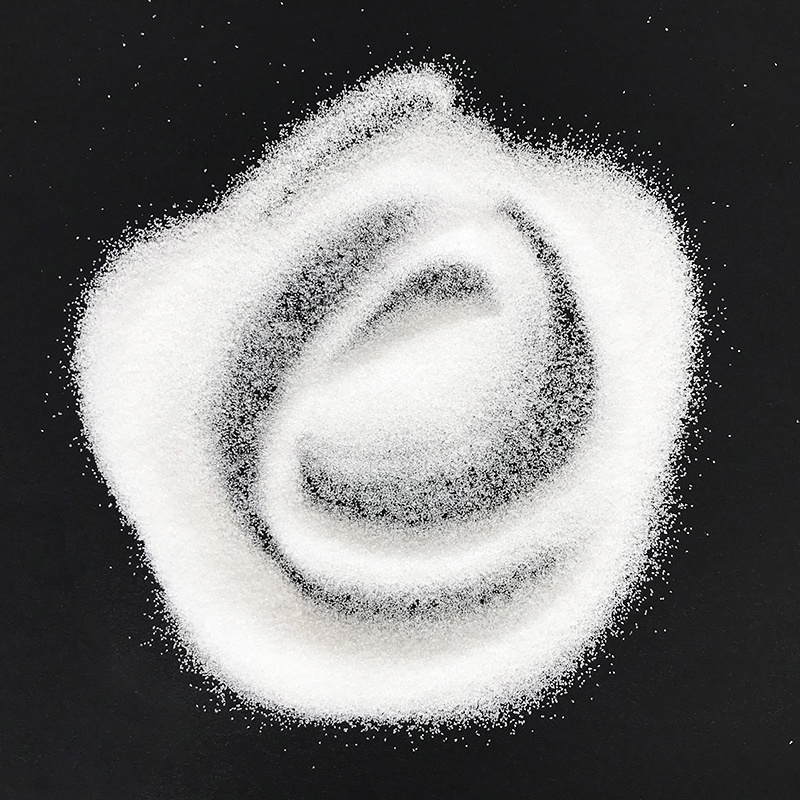
Why do customers choose white fused alumina? The primary reason is its exceptional hardness—with a Mohs hardness of 9, second only to diamond. Yet this “hardness” encompasses profound complexity. Even among white fused alumina products, a slight difference in hardness value can result in vastly different market positioning and pricing in high-end applications. Therefore, enhancing product hardness isn’t just a slogan for us manufacturers—it’s genuine expertise embedded in every step from raw materials to firing. With over two decades in the industry, I believe success hinges on focusing intensely on these critical areas.
First Gate: Raw Materials—Impure Sources Lead to Wasted Effort
As the saying goes, “Even the most skilled cook can’t make a meal without rice.” Our “rice” is alumina powder. The intricacies here go far beyond just a single purity figure.
Purity is the foundation: This is a well-worn point, but it must be emphasized. The aluminum oxide (Al₂O₃) content must be strictly maintained above 99.5%, ideally reaching 99.7% or higher. Impurities like sodium (Na₂O), silicon (SiO₂), and iron (Fe₂O₃) are like weak links. At high temperatures, they form low-melting-point glass phases—like adding a few drops of water to a solid block of ice, instantly compromising the entire structure’s integrity. Therefore, when procuring raw materials, one must keep eyes peeled like copper bells. Every batch must be accompanied by authoritative test reports, and one must maintain a clear ledger in mind.
The subtleties of crystal structure and activity: Even among alumina powders, the difference between calcined alumina and ordinary industrial alumina is significant. We favor “calcined alumina.” This material undergoes high-temperature processing that completes its crystalline transformation, ensuring superior stability and controllable shrinkage. More importantly, its crystals develop more completely with fewer internal pores. This allows it to fuse more solidly and uniformly in our arc furnaces, resulting in corundum crystals that are naturally harder and more resilient. Don’t be fooled by cheaper industrial alumina powders—their excessive reactivity and inconsistent composition result in poorly formed crystals, making hardness impossible to guarantee.
Second Stage: Melting—Insufficient Heat Equals Wasted Effort
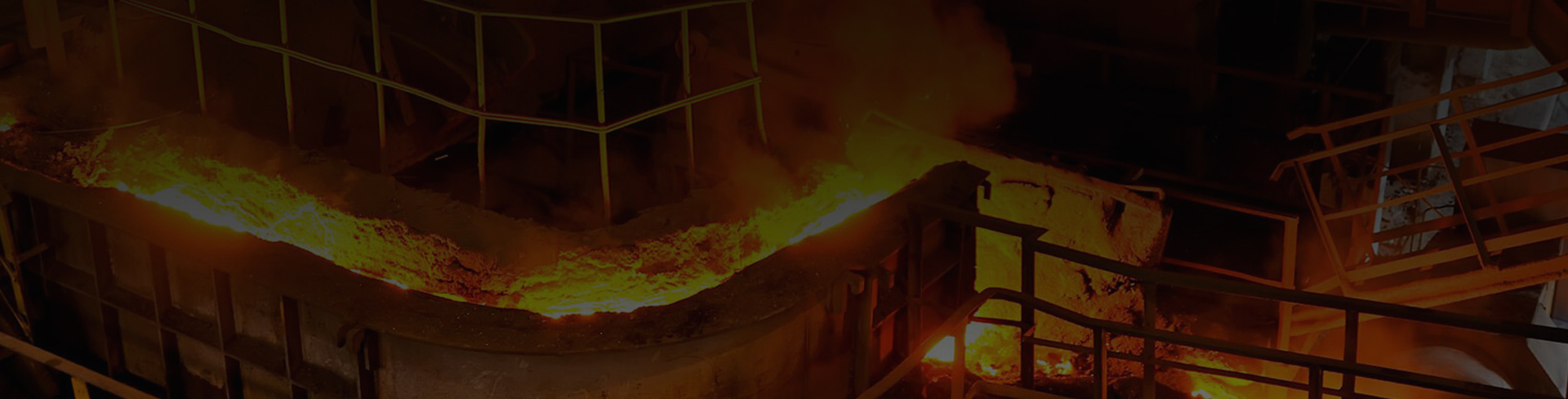
This is the most critical, technically demanding phase—essentially, how we “play with fire.” Once the electric furnace fires up, it’s all about real money and the decisive moment for product hardness.
Temperature is the “soul”: Melting white fused alumina requires temperatures exceeding 2000°C. Yet higher isn’t always better, nor is maintaining a constant temperature sufficient. We pursue “uniform high-temperature heating.” This means the furnace chamber must maintain stable, even temperatures, allowing the molten alumina to fully and uniformly complete the melting and crystallization process. If temperatures fluctuate wildly or local areas remain underheated, “unmelted material” or incompletely crystallized zones will form. These areas become the weak links in the product’s hardness. Veteran operators can judge the furnace’s condition with near-perfect accuracy just by listening to the arc’s sound and observing the flame’s color—all based on experience.
The Art of “Refining”: Melting alone isn’t enough; impurities must be “removed.” During smelting, proper techniques allow lighter impurities (primarily silicates) to rise to the surface, forming a layer of “silica slag” that is then skimmed off. The more thoroughly this is done, the purer the molten metal becomes. This results in higher-purity crystallized corundum and, consequently, greater hardness. It’s akin to simmering a fine broth: continuously skimming off the scum ensures a clear, flavorful, and pure-tasting soup.
Cooling rate is the “crowning touch”: Post-melting cooling isn’t simply a matter of letting it cool at random. Controlling the cooling rate is crucial. A relatively slow and uniform cooling process promotes larger, more complete corundum crystals with clearer grain boundaries. Coarse, intact grains yield superior macro-hardness. Rapid cooling, however, prevents crystals from fully developing and generates excessive internal stress, ultimately compromising hardness and toughness. That’s why our large ingots undergo a “slow-cooked” cooling process—it simply can’t be rushed.
Third Stage: Crushing and Grading—Rough Work, Fine Craftsmanship, Preserving the Essence
The large lumps of fused white fused alumina already possess defined hardness. But if subsequent crushing and processing is done carelessly, it can “undermine our own efforts,” ruining the hard-won high-hardness product.
The crushing method is critical: Never take shortcuts by using equipment with excessive impact force that causes over-crushing. We prioritize crushers like double-roll crushers and jaw crushers that employ “compression” and “shearing” actions, progressively reducing the material from large chunks to the required particle size. This maximizes preservation of the particles’ inherent crystal structure and minimizes the creation of internal micro-cracks. If hammer crushers are used for violent impact, many particles may appear intact externally but suffer extensive internal damage. Such micro-powders will shatter under stress during actual use, rendering their macroscopic hardness meaningless.
Classification precision is paramount: Hardness ultimately manifests through individual particles. If the particle size distribution is too broad—with some particles being too coarse and others too fine—the user will experience inconsistent results during sandblasting or mold making. This is because the force applied is uneven. Therefore, precise hydraulic or pneumatic classification is essential. Sorting particles into strict size ranges ensures consistent particle dimensions within each batch. This allows every particle to uniformly bear and transmit force, maximizing the product’s overall hardness and grinding efficiency. It’s like an army: soldiers of similar height and strength form a powerful force; a mix of heights and builds becomes a disorganized mob.
Enhancing the hardness of white fused alumina is a systematic endeavor. From raw material intake to final shipment, every step must be flawless. It tests our manufacturers’ integrity, patience, and craftsmanship. In today’s fiercely competitive market, where customers’ discernment grows ever sharper, relying on low-end products or price wars will only lead to a narrowing path.
Only by staying focused—refining raw materials to greater purity, mastering smelting techniques to perfection, and honing processing precision—can our white fused alumina products achieve unparalleled hardness. This will secure our foothold in the high-end market and command the value they deserve. This is not merely a technical challenge; it is the very path to survival and growth for white fused alumina manufacturers.