
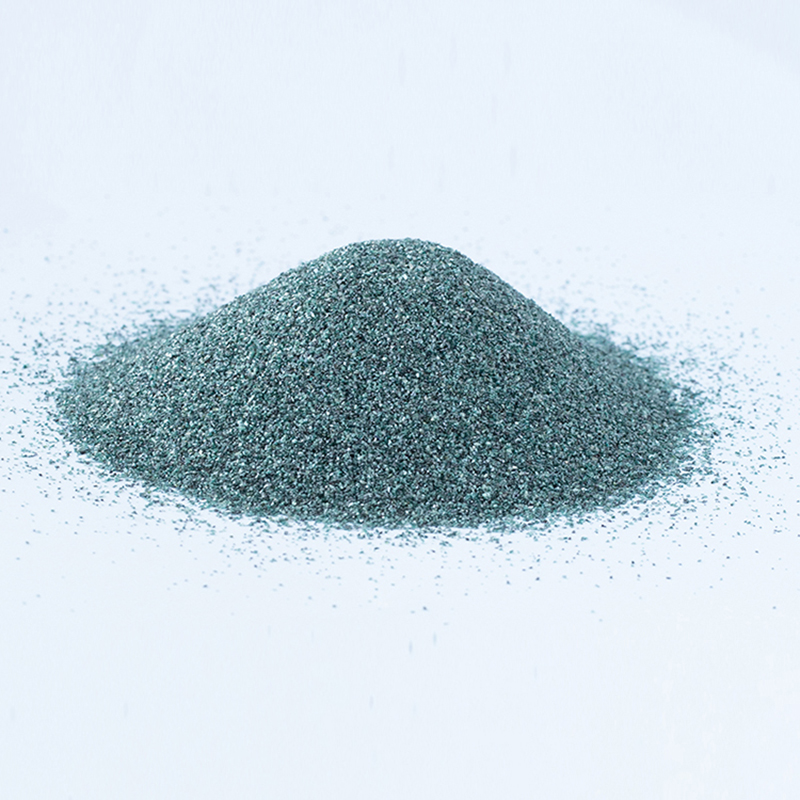
Recently, I had dinner with an old classmate who works at an aerospace materials research institute. We talked about their latest projects, and he mysteriously told me, “Do you know what new material we’re most interested in right now? You might not believe it – it’s that powder that looks like fine green sand.” Seeing my puzzled expression, he smiled and added, “Green silicon carbide micro-powder, have you heard of it? This stuff might be about to cause a small revolution in the aerospace field.” To be honest, I was skeptical at first: how could that abrasive material commonly used in grinding wheels and cutting discs be related to the sophisticated aerospace industry? But as he explained further, I realized there was much more to it than I thought. Today, let’s talk about this topic.
I. Getting to Know This “Promising Material”
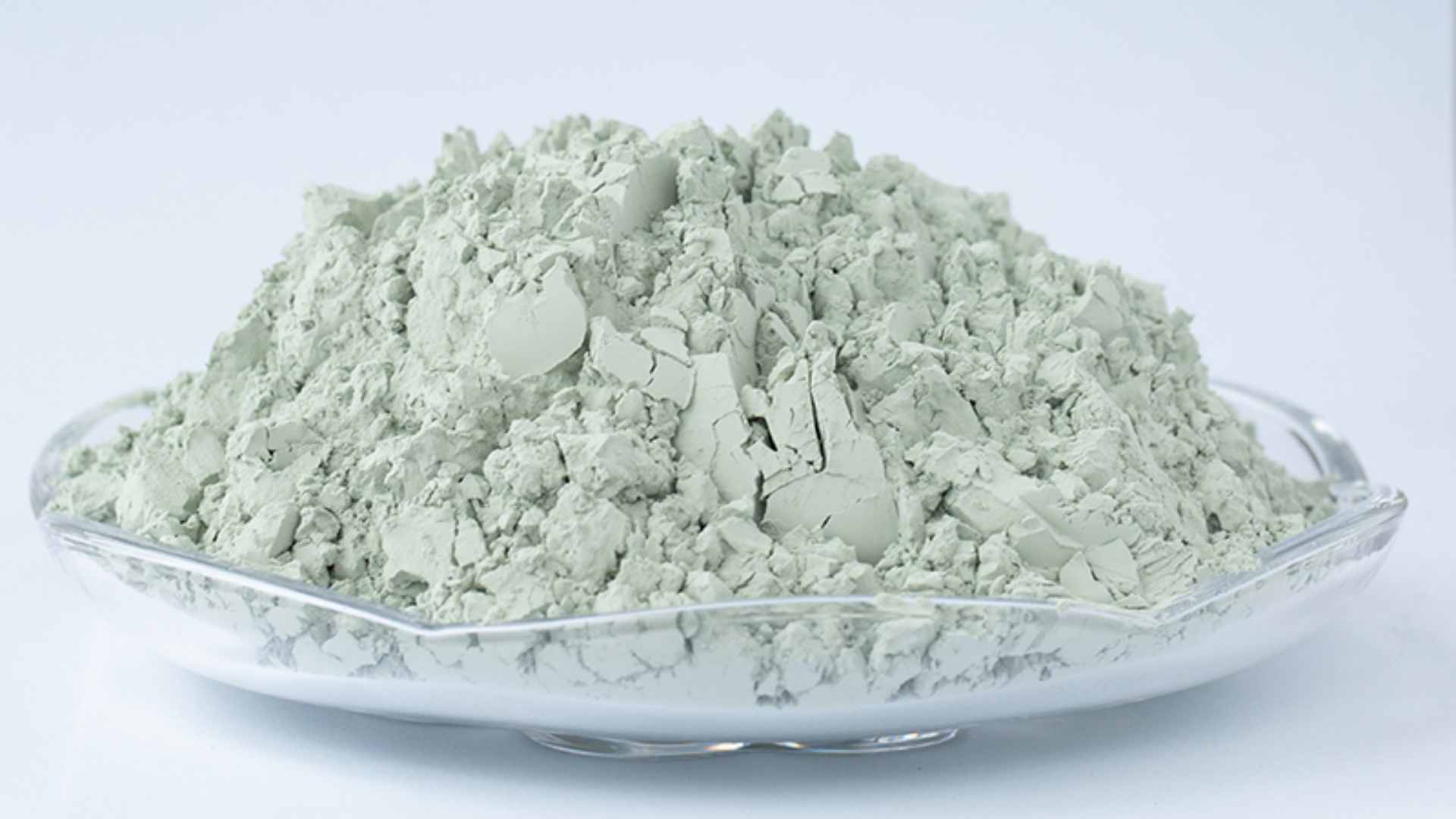
Green silicon carbide is essentially a type of silicon carbide (SiC). Compared to common black silicon carbide, it has higher purity and fewer impurities, hence its unique light green color. As for why it’s “micro-powder,” it refers to its very small particle size, usually between a few micrometers and tens of micrometers – about one-tenth to half the diameter of a human hair. “Don’t let its current use in the abrasive industry fool you,” my classmate said, “it actually has excellent properties: high hardness, high temperature resistance, chemical stability, and a low coefficient of thermal expansion. These characteristics are practically tailor-made for the aerospace field.”
Later, I did some research and found that this was indeed true. Green silicon carbide’s hardness is second only to diamond and cubic boron nitride; in air, it can withstand high temperatures of around 1600°C without oxidizing; and its coefficient of thermal expansion is only one-quarter to one-third that of common metals. These numbers might seem a bit dry, but in the aerospace field, where material performance requirements are extremely stringent, every parameter can bring immense value.
II. Weight Reduction: The Eternal Pursuit of Spacecraft
“For aerospace, weight reduction is always the key,” an aerospace engineer told me. “Every kilogram of weight saved can save a significant amount of fuel or increase the payload.” Traditional metal materials have already reached their limits in terms of weight reduction, so everyone’s attention has naturally turned to ceramic materials. Green silicon carbide reinforced ceramic matrix composites are one of the most promising candidates. These materials typically have a density of only 3.0-3.2 grams per cubic centimeter, which is significantly lighter than steel (7.8 grams per cubic centimeter) and also offers a clear advantage over titanium alloys (4.5 grams per cubic centimeter). Crucially, it maintains sufficient strength while reducing weight.
“We are researching the use of green silicon carbide composites for engine casings,” revealed an aerospace engine designer. “If we used traditional materials, this component would weigh 200 kilograms, but with the new composite material, it can be reduced to around 130 kilograms. For the entire engine, this 70-kilogram reduction is significant.” Even better, the weight reduction effect is cascading. Lighter structural components allow for corresponding weight reductions in supporting structures, like a domino effect. Studies have shown that in spacecraft, a 1-kilogram reduction in structural component weight can ultimately lead to a 5-10 kilogram reduction in system-level weight.
III. High Temperature Resistance: The “Stabilizer” in Engines
The operating temperatures of aero engines are constantly increasing; advanced turbofan engines now have turbine inlet temperatures exceeding 1700°C. At this temperature, even many high-temperature alloys begin to fail. “The hot section components of the engine are currently pushing the limits of material performance,” said my classmate from the research institute. “We urgently need materials that can operate stably at even higher temperatures.” Green silicon carbide composites can play a crucial role in this area. Pure silicon carbide can withstand temperatures above 2500°C in an inert environment, although in air, oxidation limits its use to around 1600°C. However, this is still 300-400°C higher than most high-temperature alloys.
More importantly, it maintains high strength at high temperatures. “Metal materials ‘soften’ at high temperatures, exhibiting significant creep,” explained a materials testing engineer. “But silicon carbide composites can maintain more than 70% of their room-temperature strength at 1200°C, which is very difficult for metal materials to achieve.” Currently, some research institutions are attempting to use green silicon carbide composites to manufacture non-rotating components such as nozzle guide vanes and combustion chamber liners. If these applications are successfully implemented, the thrust and efficiency of engines are expected to improve further. IV. Thermal Management: Making Heat “Obey”
Aerospace vehicles face extreme thermal environments in space: the sun-facing side can exceed 100°C, while the shaded side can drop to below -100°C. This huge temperature difference poses a severe challenge to materials and equipment. Green silicon carbide has a very desirable characteristic—excellent thermal conductivity. Its thermal conductivity is 1.5-3 times that of common metals and more than 10 times that of ordinary ceramic materials. This means it can quickly transfer heat from hot areas to cold areas, reducing localized overheating. “We are considering using green silicon carbide composites in the thermal control systems of satellites,” said an aerospace designer, “for example, as the casing of heat pipes or as thermal conductive substrates, to make the temperature of the entire system more uniform.”
In addition, its thermal expansion coefficient is very small, only about 4×10⁻⁶/℃, which is about one-fifth of that of aluminum alloy. Its size remains almost unchanged with temperature changes, a characteristic that is particularly valuable in aerospace optical systems and antenna systems requiring precise alignment. “Imagine,” the designer gave an example, “a large antenna operating in orbit, with a temperature difference of hundreds of degrees Celsius between the sun-facing and shaded sides. If traditional materials are used, thermal expansion and contraction may cause structural deformation, affecting pointing accuracy. If low-expansion green silicon carbide composite materials are used, this problem can be greatly alleviated.”
V. Stealth and Protection: More Than Just “Withstanding”
Modern aerospace vehicles have increasingly high demands on stealth performance. Radar stealth is mainly achieved through shape design and radar-absorbing materials, and green silicon carbide also has controllable potential in this area. “Pure silicon carbide is a semiconductor, and its electrical properties can be adjusted through doping,” introduced a functional materials expert. “We can design silicon carbide composite materials with specific resistivity to absorb radar waves within a certain frequency range.” Although this aspect is still in the research stage, some laboratories have already produced silicon carbide-based composite material samples with good radar-absorbing performance in the X-band (8-12 GHz).
In terms of space protection, the hardness advantage of green silicon carbide is also evident. There are a large number of micrometeoroids and space debris in space. Although the mass of each is very small, their speed is extremely high (up to tens of kilometers per second), resulting in very high impact energy. “Our experiments show that green silicon carbide composite materials have 3-5 times the resistance to high-speed particle impact compared to aluminum alloys of the same thickness,” said a space protection researcher. “If used in the protective layers of space stations or deep space probes in the future, it could significantly improve safety.”
The history of aerospace development is, in a sense, the history of material progress. From wood and canvas to aluminum alloys, and then to titanium alloys and composite materials, each material innovation has driven a leap in aircraft performance. Perhaps green silicon carbide powder and its composite materials will be one of the important driving forces for the next leap forward. Those materials scientists who are diligently researching in laboratories and striving for excellence in factories may be quietly changing the future of the skies. And green silicon carbide, this seemingly ordinary material, may be the “magic powder” in their hands, helping humanity fly higher, farther, and safer.