
When it comes to sandblasting, experienced professionals in this field know that it’s a “precision job” in surface treatment. Especially when using white fused alumina as the abrasive, it requires both skill and experience. Over the years, working in the workshop, I’ve seen many new workers struggling with the process, which made me realize that our industry really needs a standardized operating procedure. Today, I’ll share my years of experience and discuss the intricacies of white fused alumina sandblasting.
I. Preparation: Sharpening the Axe Before Chopping Wood
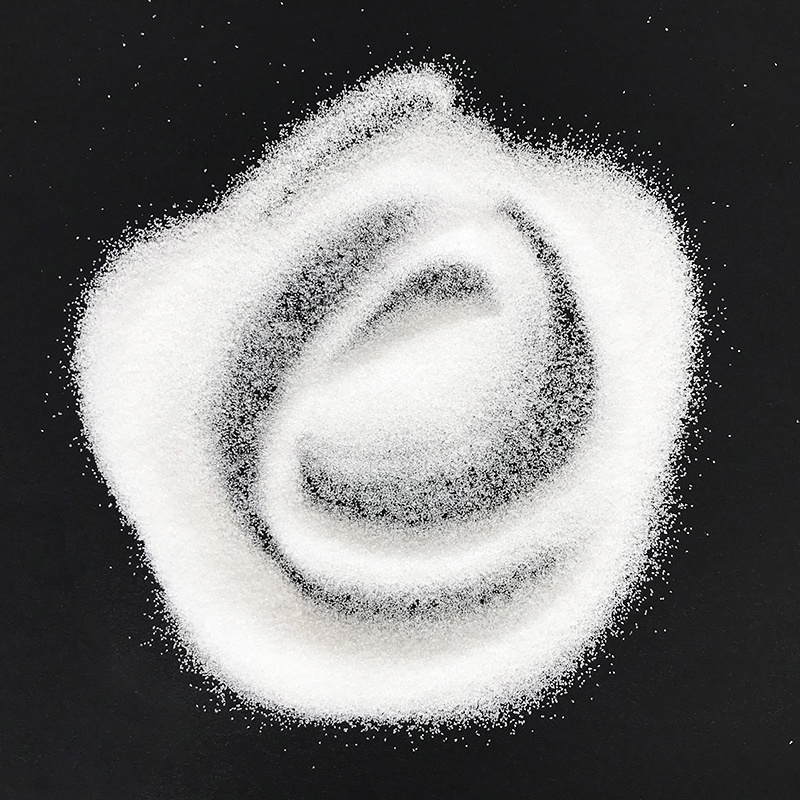
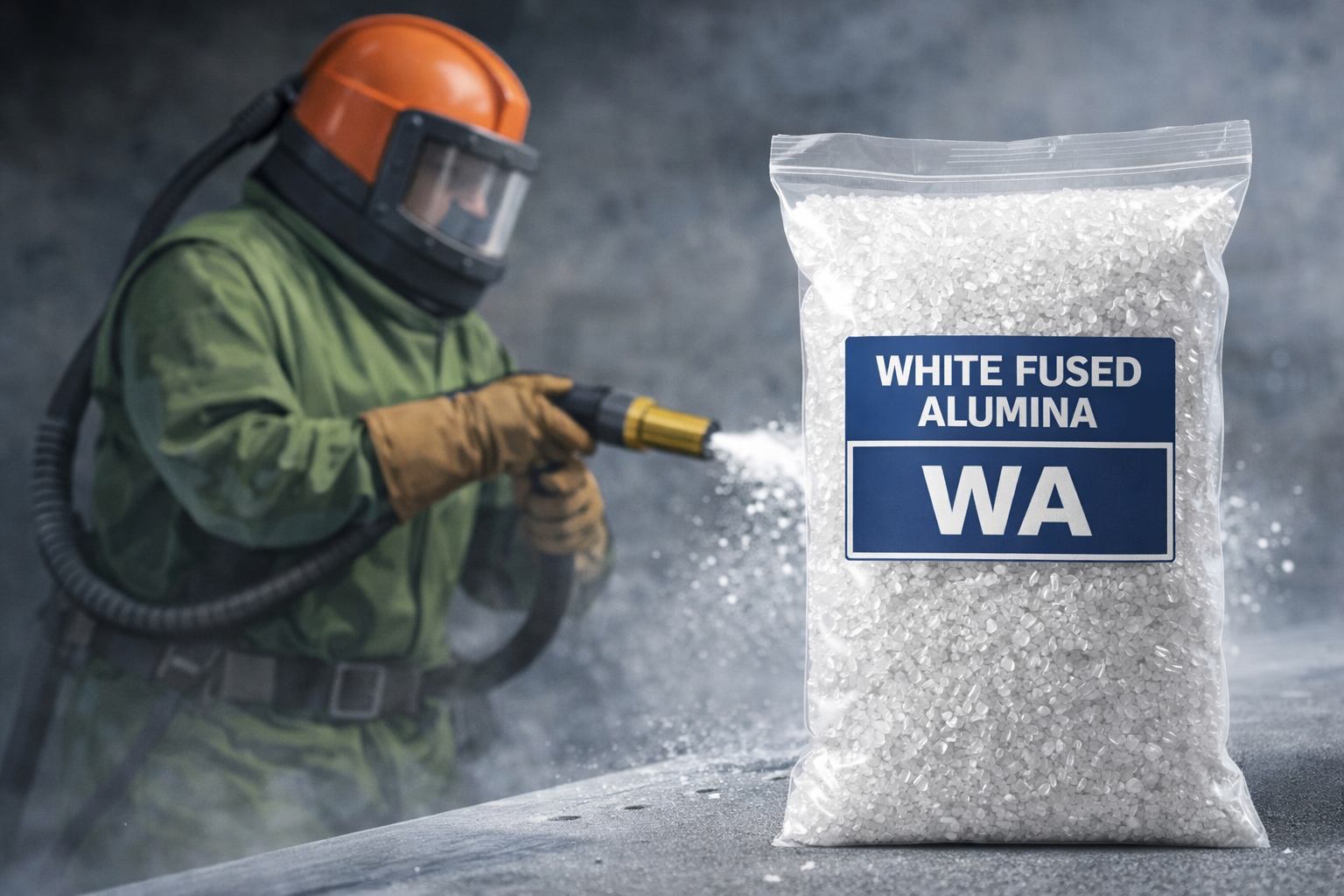
Good preparation makes the sandblasting process much easier. White fused alumina is a hard and tough material, but it can’t be used indiscriminately. First, the material must be carefully inspected. Open the packaging bag and take a handful to examine. High-quality white fused alumina particles should be uniform, with a white, slightly transparent color, and no obvious impurities. If the color is grayish or the particle size is inconsistent, there’s a problem with that batch of material. Equipment inspection is also crucial. The air compressor pressure gauge should be within the 0.6-0.8 MPa range. Unstable pressure will result in uneven blasting, like a shaky hand while painting. The spray nozzle requires special attention; with hard abrasives like white fused alumina, nozzle wear is much faster than with other materials. I generally recommend checking it every 40 hours of work, and replacing it if the wear exceeds one-tenth of the inner diameter.
Protective measures are essential for safety, not just for show. A full set of protective clothing, safety glasses, and a dust mask are all indispensable. I’ve seen young workers trying to save time by not wearing safety glasses, and a rebounding sand particle almost hit their eye. One such incident is one too many.
II. Operation Process: Precision in Every Step
Parameter setting is the “guiding star” of sandblasting. The choice of white corundum grit size depends on the specific requirements of the workpiece – coarse grit (20-40 mesh) is suitable for removing thick oxide scale, medium grit (60-80 mesh) is suitable for general surface treatment, and fine grit (100 mesh and above) is for precision parts. The angle and distance are also important: the spray gun and the workpiece surface should ideally be at a 60-80 degree angle, and the distance should be between 150-300 millimeters. If this distance is not controlled properly, the efficiency will be low, or the workpiece surface will be damaged.
Sandblasting technique relies entirely on skill. When I teach my apprentices, I often say, “Keep your wrist flexible and move evenly.” The spray gun shouldn’t stay in one place; it should be moved back and forth evenly, like painting. The overlapping area should be controlled to about one-third to avoid uneven “stripes.” For complex workpieces, you should first treat the edges, grooves, and other difficult areas, and then treat the large flat surfaces. If this order is reversed, the treatment effect on the edges will definitely be compromised. Quality control depends on observation and experience. How much blasting is enough? This depends on the workpiece material and treatment requirements. For general steel structure rust removal, you should see the bare metal; if it’s to increase coating adhesion, a uniform surface roughness is sufficient. I have a simple method: after blasting, touch the surface with your hand. If it feels like a uniform matte finish without any particularly rough or smooth spots, then the job is considered qualified.
III. Precautions: Important Tips Based on Experience
There are several areas where problems are particularly likely to occur with white corundum sandblasting, and I need to emphasize them. First is dust control. The dust generated by white corundum is very fine and remains suspended for a long time. Workshop ventilation must be good, and dust collection equipment must be operating properly. I’ve seen some small factories that turn their dust collectors on and off to save electricity, which greatly increases the risk of workers developing pneumoconiosis. This saves a little money but costs lives. Secondly, material recycling. White corundum is not cheap, so recycle as much as possible. However, note that recycled white corundum must be sieved to remove fine powder and impurities, and then mixed with new material in the appropriate proportion. Using only recycled materials doesn’t yield good results, while using only new materials is too expensive. A ratio of approximately 3:7 (new to old materials) is generally considered ideal.
Equipment maintenance is often overlooked. After each day’s work, the remaining abrasive material in the sandblasting machine should be emptied, especially in humid weather, as white corundum tends to clump together. Pipes should be inspected regularly for wear and leaks. Neglecting these small details can lead to major equipment problems, causing production delays and high repair costs.
IV. My Insights
After many years of sandblasting, I believe that standardization isn’t about turning people into machines, but rather about passing on valuable experience. Every experienced worker has their own little tricks. For example, when sandblasting particularly thin sheets, I lower the pressure by 0.1 MPa; when working with aluminum alloys, I keep the spray gun slightly further away. These details may not be explicitly written in the operating procedures, but they are crucial for ensuring quality.
Young people learning this technology shouldn’t rely solely on reading manuals and memorizing procedures; they need to get their hands dirty and observe carefully. I often tell my apprentices: “In sandblasting, you need sharp eyes, steady hands, and a meticulous mind.” Observing the changes in the surface being blasted and feeling the vibration of the spray gun – these are experiential things that require time to accumulate.
Ultimately, the standardization of the white corundum sandblasting process aims to improve product quality and ensure worker safety. But standards are rigid, while people are adaptable. In practice, we must follow the guidelines while also being flexible. I hope these experiences will be helpful to everyone, and I welcome fellow professionals to exchange ideas and help make our industry more professional.