
Key Applications of Brown Fused Alumina Micropowder in Mold Manufacturing
I. Introduction: What is Brown Fused Alumina Micropowder?
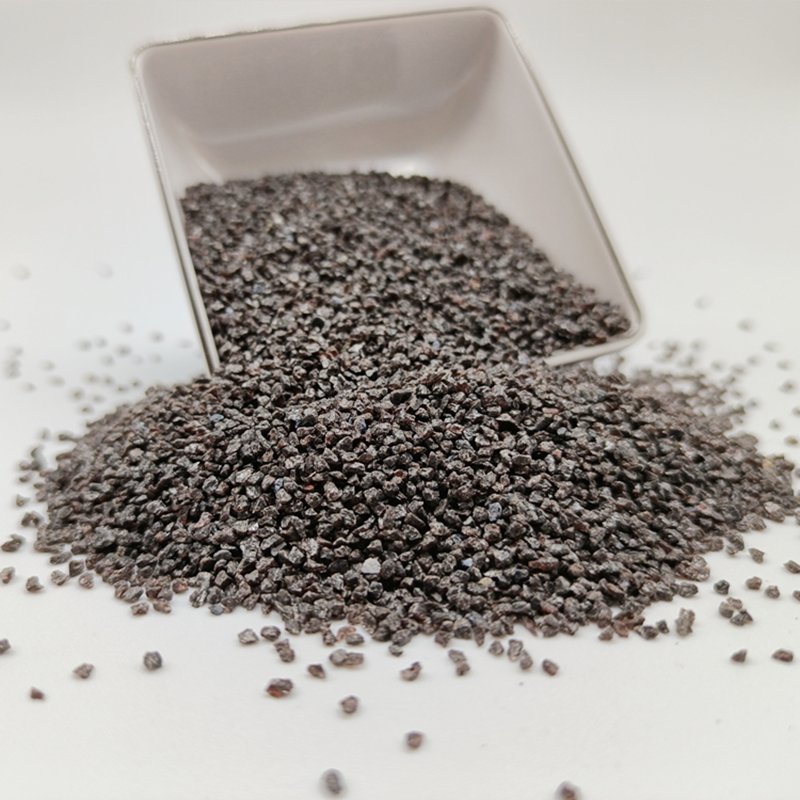
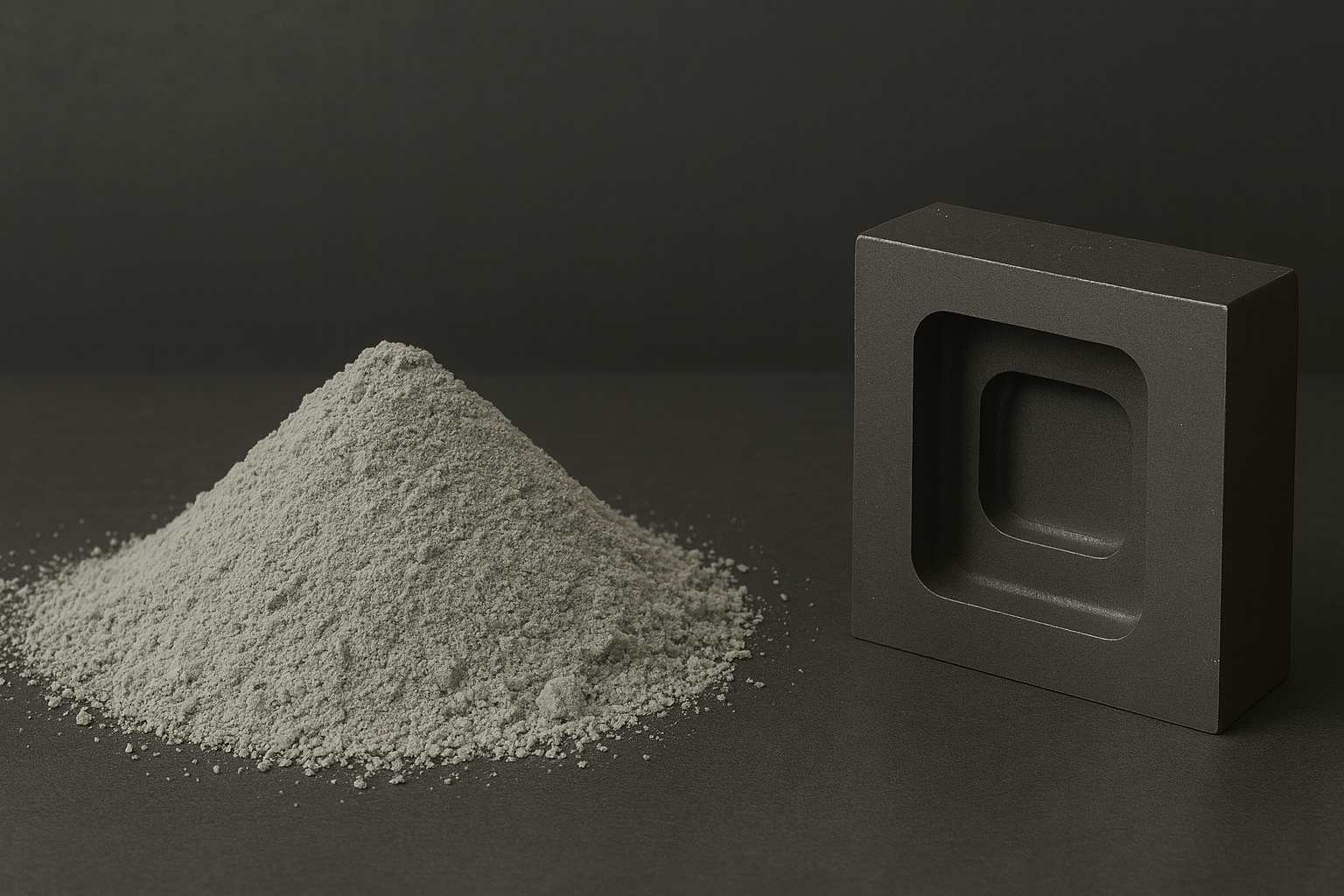
Many people may not be familiar with brown fused alumina micropowder. To put it simply, you can think of it as “fine sandpaper” for steel surfaces, except this “sandpaper” exists in powder form. It is made from high-quality bauxite, smelted at high temperatures in an electric arc furnace, and then undergoes a series of processes including fine crushing, sieving, and magnetic separation. It is brownish-red in color and has extremely high hardness—reaching 9 on the Mohs hardness scale, second only to diamond.
Ten years ago, when I first encountered this material, I didn’t think much of it. Until one time I visited a mold factory in Wenzhou and saw a master craftsman using brown fused alumina micropowder with an oilstone to finish a precision mold. The smoothness was truly a “mirror effect.” From then on, I began to pay attention to this seemingly ordinary yet complex material.
II. The “Bottleneck” in Mold Manufacturing—Polishing and Finishing
One of the most time-consuming, labor-intensive, and technically demanding stages in mold manufacturing is surface treatment. Whether it’s injection molds, die-casting molds, or stamping molds, the surface finish of the mold cavity directly determines the quality and appearance of the final product. Especially now, customer demands are increasingly stringent—automotive interior parts require a matte finish, cosmetic packaging requires a mirror effect, and electronic product casings require a brushed texture… all of which place extreme demands on mold surface treatment.
Traditional manual polishing is time-consuming and labor-intensive, relies heavily on the craftsman’s skill, and its consistency is difficult to guarantee. Mechanical polishing, on the other hand, can easily lead to over-polishing or under-polishing if the abrasive is not chosen properly. This is where the advantages of brown fused alumina micro powder become apparent.
III. Three Key Applications of Brown Fused Alumina Micro Powder in Mold Manufacturing
1. Precision Polishing: Giving Molds a “Smooth Coat”
This is the most classic application scenario for brown fused alumina micro powder. Whether it’s a plastic mold or a die-casting mold, the cavity surface needs to meet specific roughness requirements. Brown fused alumina micro powder has several unique advantages:
Just the Right Hardness: It is harder than mold steel, effectively removing material; but it is not “too hard” like diamond, avoiding excessive cutting or leaving excessively deep scratches. This combination of strength and flexibility makes it an ideal choice for precision polishing.
Strong Particle Size Controllability:** Brown fused alumina micro powder can range from several hundred to tens of thousands of mesh, meeting the needs of different polishing stages. Coarser particles are used for rough polishing to quickly remove tool marks; finer particles achieve a mirror finish during fine polishing. A factory in Ningbo specializing in automotive lampshade molds uses brown fused alumina micro powder with particles smaller than 5 micrometers for final polishing, achieving a surface roughness of less than Ra0.01μm. **Good Self-Sharpening Properties:** During polishing, the abrasive particles break down, creating new sharp edges and maintaining continuous cutting power. This is crucial for improving polishing efficiency and consistency.
2. Texture Processing: More Than Just “Smoothness”
Modern mold surfaces often require specific texture effects—imitating leather textures, wood grain, geometric patterns, etc. Brown fused alumina micro powder also has significant applications in these texture processing applications.
Brown fused alumina micropowder used for texturing is typically very fine. It is applied evenly to the mold surface through sandblasting or other methods, combined with chemical etching technology, to create textures of uniform depth and shape. A manufacturer in Guangdong specializing in high-end home appliance panel molds uses brown fused alumina micropowder of a specific particle size for surface pretreatment before chemical etching, resulting in a more uniform and delicate brushed texture than traditional methods, and a longer service life.
3. Repair and Maintenance: The “Rejuvenation” of Old Molds
Molds inevitably suffer damage during use—minor scratches, slight rust, surface carbon buildup, etc. Complete rework is too costly; localized repairs require meticulous work. Brown fused alumina micropowder can be formulated into polishing paste to repair these minor defects. Experienced technicians will select different particle sizes of micropowder based on the extent of the damage, using appropriate tools and techniques to often “bring the mold back to life.” A mold maintenance company in Shanghai specializing in automotive mold repair uses brown fused alumina micropowder to repair molds with a lifespan exceeding 80% of new molds, while the cost is only 30%.
IV. Practical Experience: Proper Use Makes it Truly Effective
Of course, even good products need to be used correctly. Based on my observations and summaries, there are several key points to ensure brown fused alumina micro powder achieves its best results:
Particle size selection should be gradual: Just like painting, start with a base coat and then refine. The same principle applies to polishing molds—start with a coarser particle size (e.g., W40-W20) to remove obvious machining marks, then gradually transition to finer particles (e.g., W10-W5), and finally use ultrafine particles (e.g., below W3.5) to achieve a mirror finish. Avoid trying to achieve the desired result all at once, as this will be counterproductive.
The carrier medium is crucial: Brown fused alumina micro powder is usually mixed with oil, water, or a specialized lubricant. Oil-based media offer good lubrication and are suitable for high-precision polishing; water-based media provide good cooling and are suitable for high-speed operations. Choose the appropriate medium based on the specific application scenario. Sometimes, the formulation of the polishing medium is even more crucial than the micronized powder itself—I know a factory in Suzhou whose “secret formula” involves adding special additives to the medium, increasing polishing efficiency by nearly 40%.
Tool matching is also important: for manual polishing, brown fused alumina micronized powder is usually used in conjunction with wool wheels, sponge wheels, etc.; mechanical polishing may use equipment such as vibratory grinding and magnetic grinding. A good tool combination maximizes the effectiveness of the micronized powder. Some advanced CNC polishing equipment can now achieve automatic abrasive feeding and recovery, greatly improving stability and efficiency.
V. Industry Trends and Future Outlook
Finally, I’d like to discuss the application prospects of brown fused alumina micronized powder in mold manufacturing. As the mold industry develops towards higher precision, more complex structures, and longer lifespan requirements, the demands on surface treatment technology and materials will inevitably rise. The trend towards nano-scale is evident: some companies are already researching and producing nanoscale brown fused alumina micronized powder. This ultrafine powder can be used to achieve near-perfect surface finishes, making it particularly suitable for high-end fields such as optical molds and medical device molds.
The Rise of Functional Modification: Surface treatment technology endows brown fused alumina micropowder with new functions, such as self-lubrication and antistatic properties, meeting the processing needs of special molds. For example, adding antistatic modified micropowder during polishing can reduce dust adsorption and improve cleanliness. Emerging Intelligent Applications: Combining machine vision and artificial intelligence technologies, online monitoring and adaptive adjustment of the polishing process can be achieved—adjusting abrasive supply and pressure parameters in real time based on surface conditions. This will be an important direction for future development.
Conclusion: Small Powder, Big Impact
In the mold manufacturing industry, often it’s about focusing on the details. Brown fused alumina micropowder is such a seemingly insignificant material that can solve major problems at crucial moments. It may not appear at the top of the mold cost list, but its impact on mold quality and lifespan is real. The next time you see an injection-molded product with a mirror-like surface or delicate, uniform texture, you might consider—brown fused alumina micropowder may have played a part in this. That’s how this industry works; the deeper you delve, the more you discover the intricacies and wisdom “hidden in the details.”