
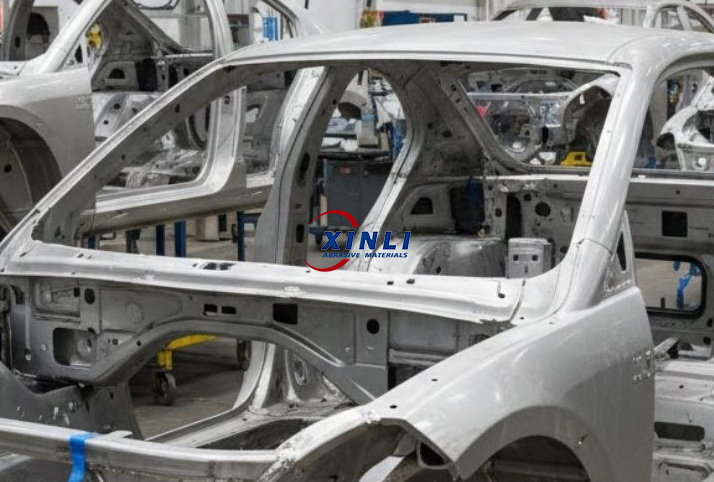
With the rapid development of the new energy vehicle and high-end customized car markets, automotive manufacturing processes are undergoing a comprehensive upgrade towards refinement, high-end quality, and personalization. Consumers’ aesthetic demands for car exteriors are also constantly increasing, no longer limited to the glossy finish of traditional high-gloss paint. Subtle, refined, and layered matte, brushed, and frosted textures have gradually become the mainstream design for luxury and customized models. However, traditional paint processing techniques suffer from uneven textures, harsh finishes, and poor adaptability, making it difficult to meet the quality requirements of high-end car bodies. Against this industry backdrop, white fused alumina sandblasting, with its superior surface treatment performance, stable processing results, and environmentally friendly production advantages, has become a core process for automotive paint and metal substrate texture processing, providing a new solution for upgrading the texture of automotive exteriors.
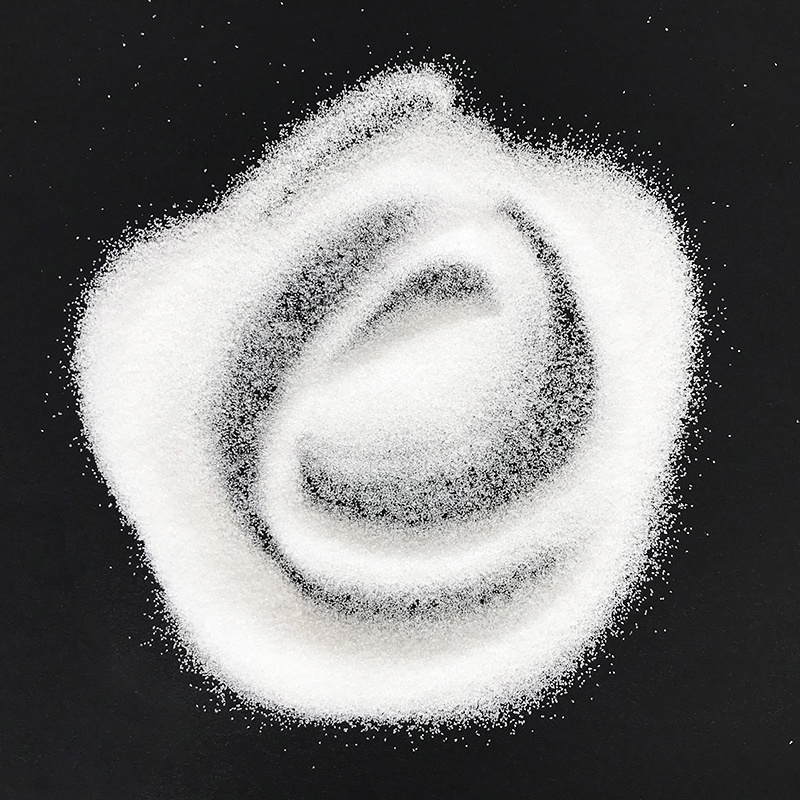
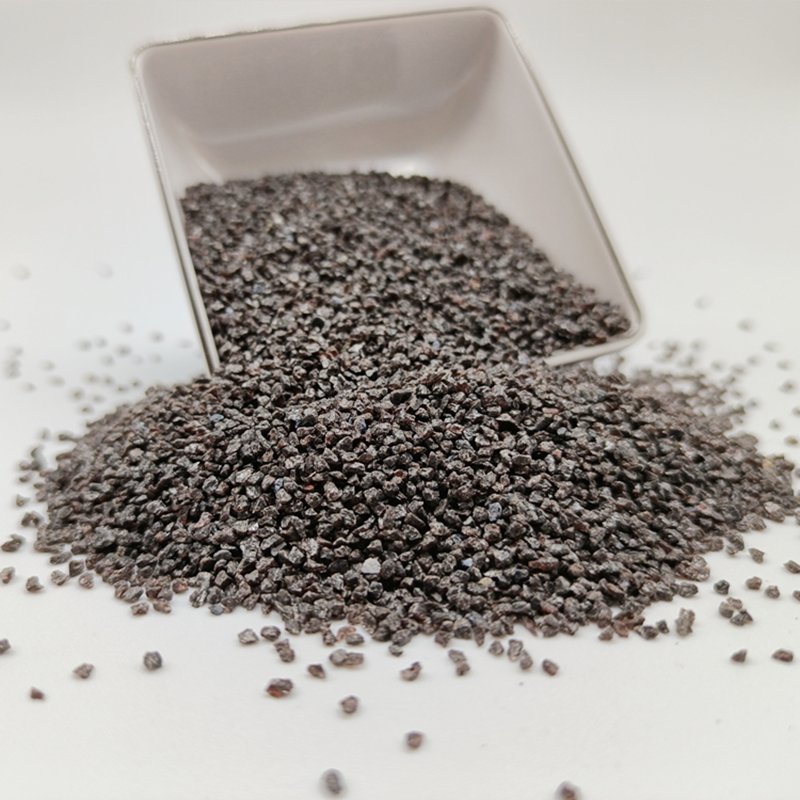
White fused alumina, also known as white fused alumina, is a core environmentally friendly abrasive in the high-end surface treatment field. It possesses characteristics such as high hardness, high purity, uniform particle size, stable cutting force, low impurities, and wear resistance. Compared to common abrasives such as brown fused alumina and quartz sand, it has an extremely low iron content. During processing, white fused alumina does not pose a risk of oxidation or rust to automotive metal substrates, perfectly matching the high-precision machining standards of car bodies. In actual production, by precisely matching core parameters such as the particle size of the white fused alumina abrasive, sandblasting pressure, and blasting distance, a uniform, delicate, and sophisticated matte and brushed texture can be created on the surface of substrates such as car body metal and aluminum alloy trim panels. Simultaneously, the sandblasted substrate surface forms a micro-uneven structure, significantly improving the adhesion of paint and coatings, effectively solving problems such as paint peeling, flaking, and poor weather resistance, thereby significantly extending the service life of the car body paint and improving the overall quality stability of the vehicle.
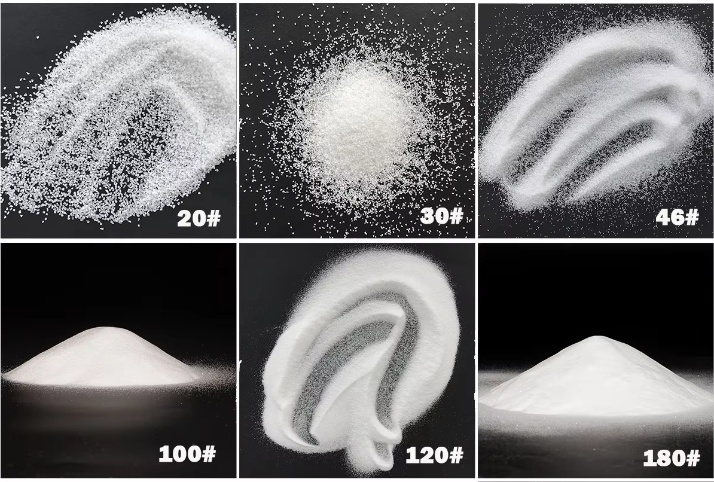
In automotive mass production and aftermarket processing, white fused alumina sandblasting technology can be applied to core exterior components of the car body, including key areas such as the roof, hood, door panels, body aluminum alloy trim, wheels, and interior metal trim pieces. Extensive industry practical verification has shown that using fine white fused alumina abrasive of F150-F180, setting a constant sandblasting pressure of 2-3 bar, maintaining a standard blasting distance of 15-20 cm, and combining a uniform scanning sandblasting method, this process can create a delicate texture on various curved and flat metal substrates, free of dead angles, scratches, and particle defects. This process effectively covers minor scratches, oxidation spots, and mold patterns on the substrate surface, optimizing the substrate’s flatness. Ultimately, it presents a soft, translucent, high-end matte texture, eliminating the roughness and cheapness of traditional processes, thus greatly enhancing the overall visual sophistication and luxurious feel of the vehicle.
Compared to traditional mechanical brushing, hand polishing, and chemical etching processes for body textures, white fused alumina sandblasting offers significant comprehensive advantages. Traditional mechanical brushing is only suitable for flat sheets and cannot meet the processing needs of today’s mainstream streamlined bodies, curved trim pieces, and irregularly shaped structural parts, resulting in strong processing limitations. Furthermore, mass production often results in inconsistent texture depth and abrupt transitions. Manual polishing is inefficient and suffers from inconsistent quality control, making it unsuitable for large-scale production. Chemical etching processes have drawbacks such as environmental pollution, substrate damage, and low safety. In contrast, white fused alumina blasting offers exceptional adaptability, high processing efficiency, and excellent texture consistency. It perfectly adapts to complex curved surfaces, irregular structures, and the comprehensive texturing of precision small parts. In mass production, its yield rate far exceeds that of traditional processes. Moreover, white fused alumina abrasive can be recycled multiple times, produces low dust emissions during operation, and leaves no harmful residues, meeting the green production and low-carbon environmental protection standards of the automotive industry, thus effectively reducing production costs and environmental pressure for enterprises.
Currently, white fused alumina blasting is widely used in the mass production of high-end gasoline vehicles, new energy flagship models, concept cars, and in high-end automotive customization and modification. By flexibly adjusting the abrasive particle size and process parameters, diverse texture effects can be achieved. For example, using fine-grained abrasives can create an extremely delicate matte finish; using medium-grained abrasives can produce a natural, smooth, slightly brushed texture. This process can precisely adapt to different vehicle design positioning, including minimalist, sporty, and understated luxury styles, thus comprehensively meeting the mass production standardization needs of automakers and the personalized customization needs of consumers. With its stable quality and rich texture, white fused alumina sandblasting has become the preferred surface treatment solution for major automakers and professional modification shops.
In today’s highly homogenized automotive exterior market, unique paint textures and high-end feel have become core competitive advantages for automotive products. White fused alumina sandblasting not only visually reshapes the high-end appearance of automobiles but also improves the durability, stability, and refinement of the paint surface from a technological perspective, effectively enhancing the added value and market competitiveness of the product. In the future, as the trends of high-end, personalized, and refined automobiles continue to deepen, consumers’ demands for the texture of vehicle surfaces will continue to increase. The white fused alumina sandblasting process will continue to be upgraded, maintaining its core position in areas such as automotive paint texture processing and fine metal part processing, providing continuous impetus for process innovation and quality upgrades in the automotive manufacturing industry.