

The Pain Points of Mold Polishing
Anyone who has worked in the mold industry for over a decade knows that while polishing seems simple, it’s actually quite complex. Many mold manufacturers find the polishing process the most troublesome – it’s time-consuming, the results are inconsistent, and it heavily relies on the experience of the technician. This is especially true now, with the increasing diversity of mold materials, from traditional P20 steel to high-hardness S136, and even cemented carbide and ceramic materials. Traditional polishing materials and processes often fall short. The polishing workshop supervisor of a precision mold factory in Shenzhen told me, “Previously, we used boron carbide and diamond powder, which worked well, but the cost was too high; many small factories simply couldn’t afford it. Ordinary corundum powder is prone to scratches, and sometimes, after polishing, under certain lighting conditions, there are still hazy marks.”
The “Exceptional Qualities” of White Fused Alumina Micro-powder
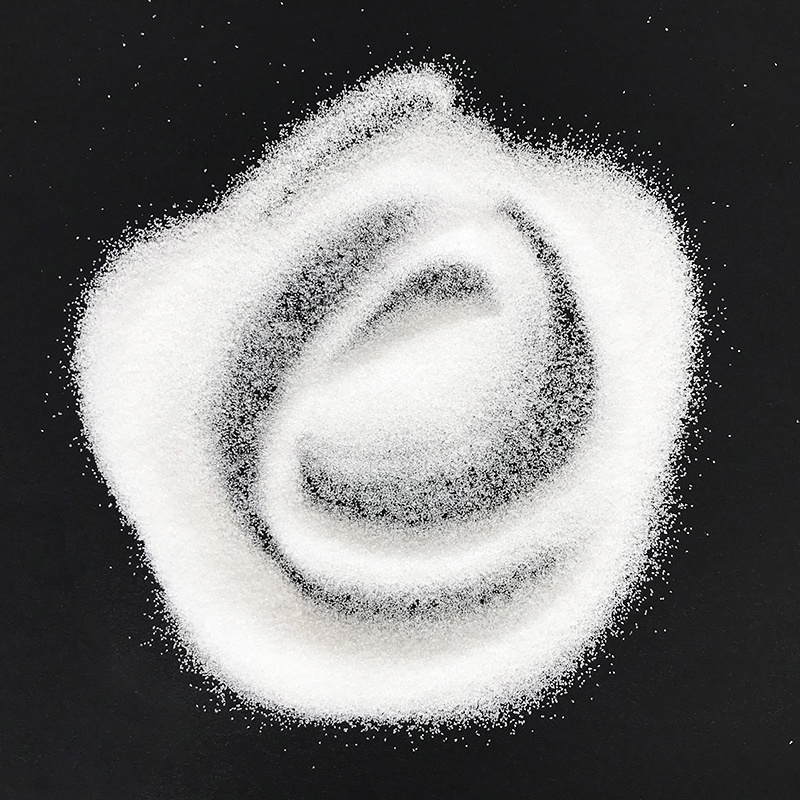
The reason white fused alumina micro-powder performs so well in mold polishing is determined by its “genetic makeup.” Its main component is α-aluminum oxide, with a purity of over 99%. What does this purity mean? It means fewer impurities, making it less likely to cause accidental scratches during the polishing process. It’s like sanding wood with fine sandpaper; if the sandpaper contains a few coarse grains, the surface will be ruined. Another advantage of high purity is uniform hardness. White fused alumina has a Mohs hardness of 9.0, second only to diamond and silicon carbide, but its advantage lies in the consistency of its hardness. Those who do polishing understand that if the abrasive particles have inconsistent hardness, the softer particles are consumed first, and the harder particles protrude, easily causing scratches. White fused alumina micro-powder performs quite “uniformly” in this regard.
The Ingenuity of Particle Morphology
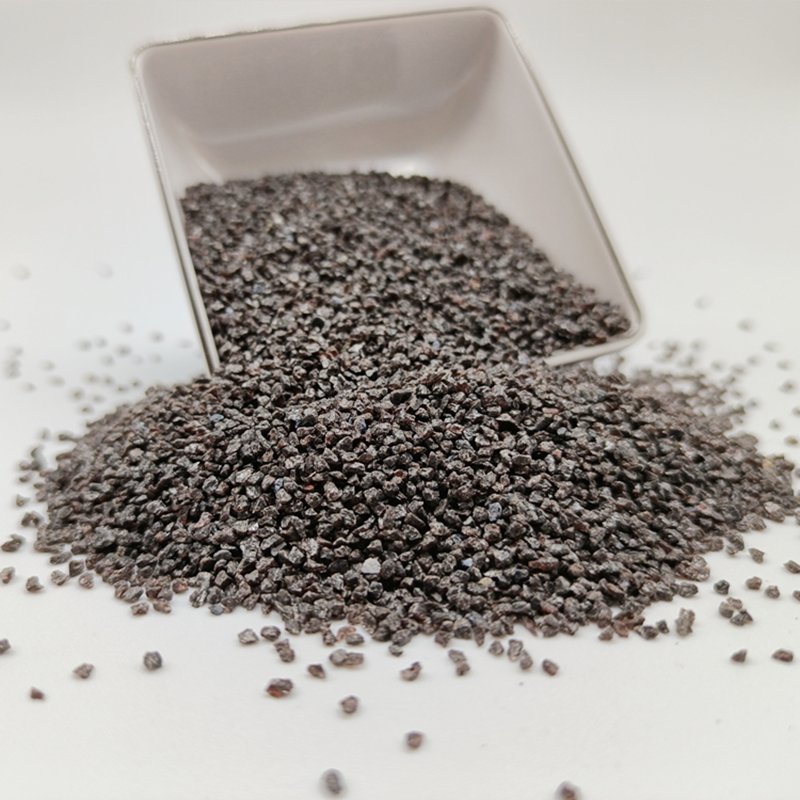
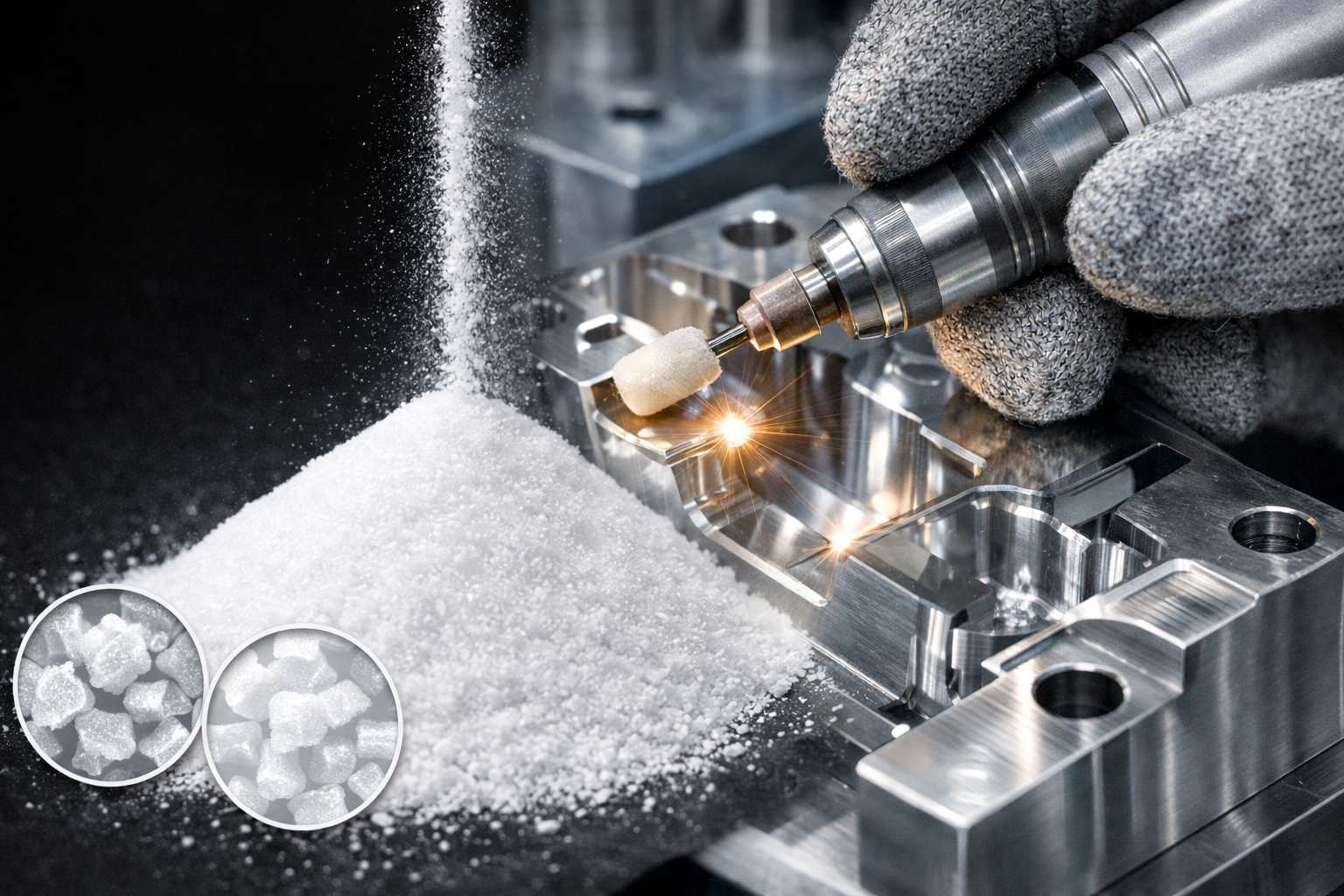
Last year, I visited a white fused alumina micro-powder production plant in Jiangsu, and the technical manager showed me a comparison image under an electron microscope: “Look, this is the white fused alumina micro-powder we produce; the particles are mostly hexagonal or nearly spherical, and the edges have been specially treated to become rounded. Ordinary brown fused alumina micro-powder, on the other hand, has irregular shapes and sharp edges.” This difference is crucial in mold polishing. While sharp edges offer strong cutting power, they are prone to causing scratches; rounded particles, on the other hand, act more like “rolling and grinding” than “cutting,” making them particularly suitable for polishing molds that require extremely high surface finish. The advantages of rounded particles are even more pronounced when polishing difficult-to-reach areas such as curved surfaces and inner corners.
The Art of Particle Size Control
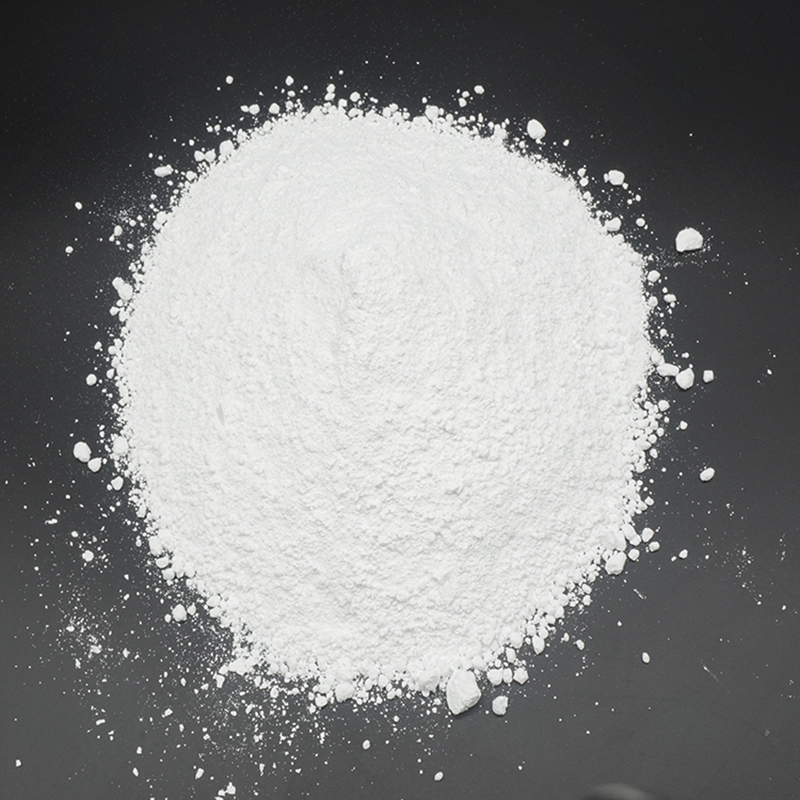
White corundum micro-powder achieves a remarkably fine level of particle size control. Traditional polishing abrasives are often described as “2000 mesh” or “3000 mesh,” but in reality, the particle size distribution can range from 1500 mesh to 3500 mesh. High-quality white corundum micro-powder, however, can achieve a narrow particle size distribution. For example, a product labeled W7 (equivalent to 2500 mesh) will have over 95% of its particles within the W6.5-W7.5 range.
How important is a narrow particle size distribution for mold polishing? Imagine sifting rice with a sieve; if the rice grains are uniform in size, the sifting process is smooth; if they are of varying sizes, the smaller grains will clog the sieve holes. The same principle applies to polishing. Micro-powder with a uniform particle size ensures consistent cutting during the polishing process, preventing situations where some areas are over-polished while others are under-polished.
Performance in Practical Applications
A company in Guangzhou that manufactures cosmetic packaging molds previously required 35 hours to polish a set of high-end lipstick tube molds. After switching to white corundum micro-powder, the time was reduced to 22 hours. Their polishing technician told me, “Previously, we had to be extremely careful during the final stages of polishing; even a slight mistake could result in over-polishing or scratches. Now, with white corundum micro-powder, the polishing process is easier to control, especially in the final stages, where a few light passes are enough to achieve a mirror finish.”
In the field of mobile phone mold polishing, the advantages of white corundum micro-powder are even more pronounced. Mobile phone casings require extremely high surface finish, sometimes even below Ra 0.01 micrometers. A factory in Dongguan specializing in mobile phone metal casing molds conducted a comparative test: when polishing aluminum alloy molds, using white corundum micro-powder resulted in a 20% reduction in surface roughness compared to traditional polishing materials, while also reducing polishing time by 15%. Polishing Applications of Special Mold Materials
With advancements in mold materials, high-hardness and high-wear-resistance materials are becoming increasingly common, posing new challenges for polishing. For example, traditional polishing materials are often inefficient when used on materials like powder high-speed steel and cemented carbide. A mold factory in Shanghai encountered difficulties when processing cemented carbide stamping molds; the mold hardness reached over HRC70, and ordinary polishing materials were almost ineffective. They later tried using white corundum micro-powder with a special polishing paste, and the results were surprisingly good. Their technical director said, “The white corundum micro-powder has sufficient hardness and appropriate self-sharpening properties. During the polishing process, new cutting edges are constantly exposed, maintaining polishing efficiency.”
Economic Benefits
Many mold factory owners initially worried about the high cost of white corundum micro-powder, but a closer look reveals that the overall benefits are superior. A mold factory owner in Taizhou, Zhejiang, calculated the costs for me: originally, polishing a set of medium-sized plastic molds cost about 800 yuan in labor and materials, taking 8 hours; after using white corundum micro-powder, although the material cost increased by 100 yuan, the time was reduced to 5 hours, and labor costs decreased by more than 200 yuan, resulting in an overall cost reduction of more than 100 yuan. Moreover, the surface quality was more stable, and customer complaints decreased.
More importantly, it extends the mold lifespan. A proper polishing process can eliminate microscopic cracks on the mold surface and reduce stress concentration. Data shows that molds carefully polished with white corundum micro-powder have an average lifespan extension of 15%-20%. This is of immense value for molds that cost tens or even hundreds of thousands of yuan.
Usage Tips and Precautions
Although white corundum micro-powder has excellent performance, its usage requires specific techniques. A master craftsman from a professional polishing service company in Qingdao shared some experience:
Graded use is key. You shouldn’t use the same grit size for both rough and fine polishing; you should proceed gradually in a “coarse-medium-fine” sequence. For example, you can start with W40, gradually transition to W10, and finally use W3.5 or finer micro-powder for fine polishing. The choice of carrier is important. White corundum micro-powder needs to be used with an appropriate polishing paste or liquid carrier. Oil-based carriers are suitable for steel polishing, while water-based carriers are more suitable for non-ferrous metals. The carrier not only provides suspension and lubrication but also removes the removed debris.
Pressure and speed must be matched. Higher polishing pressure is not always better; excessive pressure can cause micro-particles to embed in the workpiece surface. Generally, the finer the particle size, the lower the pressure, and the speed can be appropriately increased. The cleaning process cannot be overlooked. Every time the particle size is changed, the mold surface and polishing tools must be thoroughly cleaned to prevent coarse particles from mixing into the next process. Experienced technicians will use a magnifying glass to check the cleanliness after each process.
Industry Development Trends
Based on observations from exhibitions and technical exchanges in recent years, several trends are emerging in the application of white alumina micro-powder in mold polishing: Customization is becoming increasingly common. Many micro-powder manufacturers are starting to offer “tailor-made” services, providing specific particle size ratios of white alumina micro-powder based on factors such as mold material, polishing equipment, and surface finish requirements. Some have even developed specialized formulas for different types of steel.
Composite products are gaining popularity. Polishing products combining white alumina with other materials are beginning to appear, such as white alumina combined with cerium oxide, balancing cutting force and surface finish; and combined with diamond micro-powder for rough polishing of ultra-hard materials. Environmentally friendly products are becoming a new hot spot. With increasing environmental requirements, white alumina micro-powder products that are free of heavy metals, low in dust, and easily recyclable are receiving more attention. Some manufacturers have developed water-soluble polishing systems to reduce the use of organic solvents.